
Categories
Selling a Home in Bakersfield, Bakersfield Real Estate Tips, Home Pricing Strategy, Seller EducationPublished February 4, 2026
Wondering Why Your Home Isn’t Selling? Here’s What the Market Is Really Saying

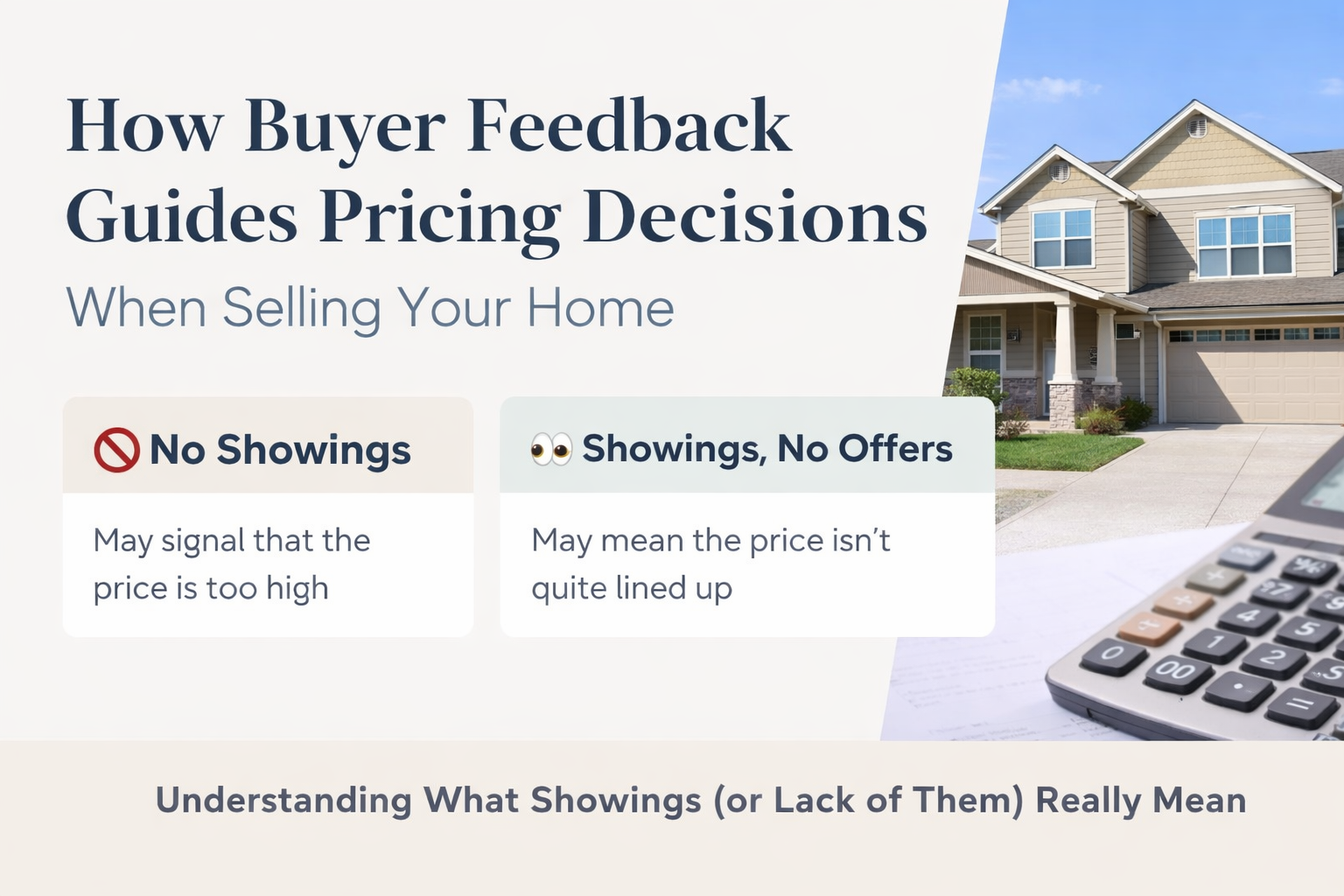
Why Your Home Isn’t Selling (And It’s Not What Most Sellers Think)
When a home doesn’t sell quickly, sellers often start asking the same questions:
Is the market bad?
Is my home overpriced?
Is my agent doing enough?
Is something wrong with my house?
In most cases, the answer isn’t blame — it’s buyer feedback.
The real reason many homes don’t sell comes down to how buyers are responding during the first few weeks on the market. Showings, or the lack of them, provide clear signals about how a home is positioned compared to current competition.
Understanding these signals early can make the difference between selling efficiently and watching a home sit longer than necessary.
Buyers Decide Before They Ever Step Inside
Today’s buyers make decisions online first.
Before scheduling a showing, buyers are comparing:
• Price
• Photos
• Location
• Size and layout
• Condition
• Similar homes in the same price range
If a home isn’t attracting interest early, it’s rarely because something is “wrong” with the property itself. More often, the price does not align with what buyers are seeing elsewhere.
This is why early buyer activity is one of the most important indicators of whether a home is positioned correctly.
If There Are Little or No Showings
When a listing receives little to no showing activity, the market is sending a clear message.
What this usually means:
• Buyers are skipping the listing entirely
• The home is being filtered out of searches
• Competing homes appear to offer better value
This type of feedback suggests the home is priced above what buyers are willing to consider at that moment in the market.
In these situations, agents often recommend a larger strategic pricing adjustment to re-position the home and bring it back into buyer consideration. The goal is not to “give the home away,” but to restore visibility, interest, and momentum.
Waiting too long to respond to this feedback can result in buyers assuming something is wrong with the home — even when nothing is.
If There Are Showings but No Offers
Showings without offers are often misunderstood, but they can be very useful feedback.
What this usually means:
• Buyers like the home
• The layout and condition work
• The home is being compared seriously
However, when buyers ultimately choose other homes, it usually comes down to price relative to comparable options.
In these cases, smaller strategic pricing adjustments can often have a big impact. Even modest changes can:
• Increase urgency
• Improve buyer confidence
• Position the home more competitively
This is often the point where a home goes from “considered” to “chosen.”
Why the First 14–21 Days Matter So Much
The first few weeks after a home hits the market are critical.
This is when:
• Buyer interest is highest
• Online visibility is strongest
• Serious buyers are watching closely
That’s why experienced agents build in a pricing review checkpoint around 14–21 days on market.
At this point, decisions are made using real data:
• Showing activity
• Buyer feedback
• Comparison to homes that are selling, not just listed
Responding early helps protect the home’s perceived value and prevents extended time on market, which can ultimately lead to deeper price reductions later.
Pricing Is Strategy — Not Failure
One of the biggest misconceptions sellers have is that adjusting price means something went wrong.
In reality, pricing is a strategy, not a judgment.
Markets shift. Buyer expectations change. Competing inventory evolves quickly.
Successful sellers aren’t the ones who never adjust — they’re the ones who respond intelligently to what the market is telling them.
The Real Reason Homes Don’t Sell
Most homes don’t sell because of:
• Overpricing relative to buyer expectations
• Delayed response to market feedback
• Waiting too long to make strategic adjustments
It’s rarely about the home itself.
When sellers understand how buyer behavior works and how pricing decisions are made, the process becomes clearer, calmer, and far more effective.
Final Thought
The key to selling a home is not guessing — it’s listening.
Buyer feedback provides the most honest insight into what’s happening in the market. When sellers and agents respond strategically, homes sell faster, with less stress, and often for stronger final results.
Thinking about selling your home and wondering how today’s buyers would respond to your price?
A clear pricing strategy makes all the difference. CLICK HERE to get started!
Linda Banales 🏡
Broker Associate | Watson Realty
CalDRE 01172638
661-303-5401
Hablo Español
Realtor since 1993 | 1,400+ Homes Sold
bakersfieldishome.com/lindabanales

Linda Banales
Listing Specialist | Bakersfield Real Estate Group | Watson Realty
or another way